
New Build Cleaning: What the Developer's Clean Misses and What to Check Before You Move In
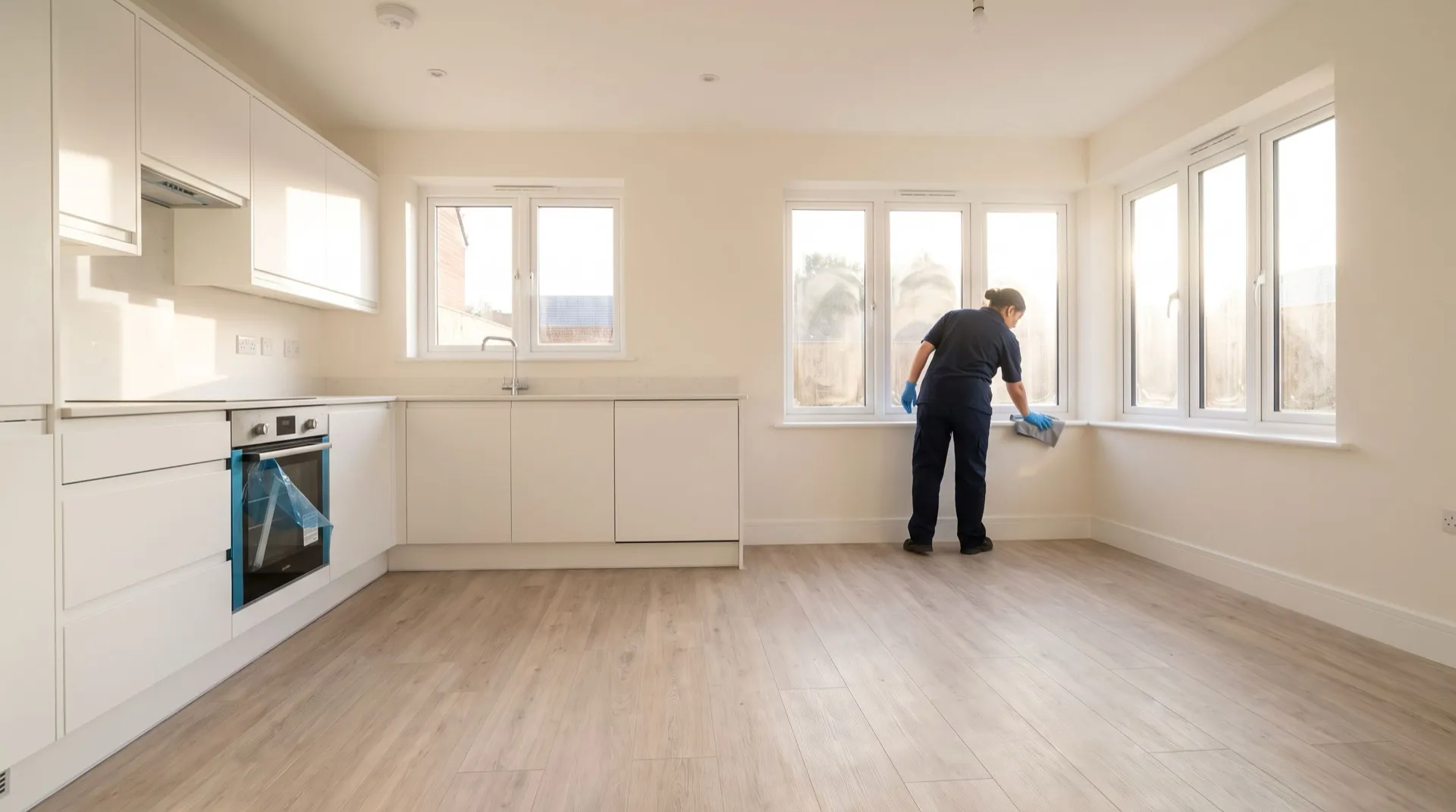
New build cleaning is usually done before you get the keys. Most developers have the home cleaned by their own builders clean and sparkle clean contractor before completion.
The catch is what that clean is for. It is done to get the unit through inspection and sign-off, not to make it ready to live in, and fine dust keeps settling for weeks after the trades have gone.
The After Builders Cleaning Company is a specialist after builders cleaning firm, and handover cleans on new developments make up a large part of our work. The biggest was 100 apartments at Avonside House in Peterborough, so we have seen the gap between "signed off" and "ready to move into" many times over.
This guide is for buyers about to get the keys and for the developers and contractors handing homes over. It covers what the developer is actually required to do, what usually gets missed, and what to check before you move in.
Table of Contents
- Do New Builds Get Cleaned Before You Move In?
- What the Developer Is Actually Required to Do
- What the Developer's Clean Usually Misses
- Why the Dust Keeps Coming Back in a New Build
- Clean First, Then Inspect
- What to Check Before You Move In
- For Developers and Contractors
- Doing It Yourself vs Booking a New Build Clean
- FAQs
Do New Builds Get Cleaned Before You Move In?
Yes, in most cases the developer books a builders clean after the trades leave and a sparkle clean shortly before completion. Both are aimed at getting the home past inspection, so floors, glass, worktops and sanitaryware get the attention while inside cupboards, vents and window tracks are often skipped.
If you are not sure how the two stages differ, our guide to builders clean vs sparkle clean explains it. For new build buyers, the short version is that the sparkle clean is the last one the developer pays for.
How good it is varies a lot. In our experience, some developers' cleans are excellent and some are a quick wipe of the surfaces you see first.
Even a good clean has a limit. A new home is still drying out when you move in, and dust keeps arriving after the cleaners have gone.
What the Developer Is Actually Required to Do
Two documents matter for many new homes. One is the NHBC Standards, which NHBC-registered builders work to, and the other is the New Homes Quality Code, and neither gives you a cleaning specification.
What the NHBC Standards say
The NHBC Standards (2024 edition), Chapter 9 cover finishes. Before completion and handover, "work should be left in a clean state" and "temporary coverings and protection should be removed, and the fitments and finishings cleaned and dusted".
That is the whole requirement. There is nothing about the inside of units, and nothing about vents or window tracks.
What the New Homes Quality Code says
If your developer is registered with the New Homes Quality Board, the New Homes Quality Code applies. It says completion can only happen on a "complete new home", where any further work is "just decorative or to correct any faults".
The Code gives you the right to a pre-completion inspection, but it does not define a cleaning standard either.
What that means in practice
The legal bar is a "clean state", and what that means is left to the developer. A home that has been swept, wiped and had its film removed can meet the wording and still leave you a day of cleaning.
What the Developer's Clean Usually Misses
These are the areas we most often find still dirty when we go into a new build after the developer's own clean. It is drawn from our own handovers, not a survey, and plenty of developers get most of it right.
| Area | What we usually find | Why it gets missed |
|---|---|---|
| Inside kitchen units | Sawdust in drawer runners, dust in hinge cups and on shelf edges | Doors closed on the day, and the clean is timed against the clock |
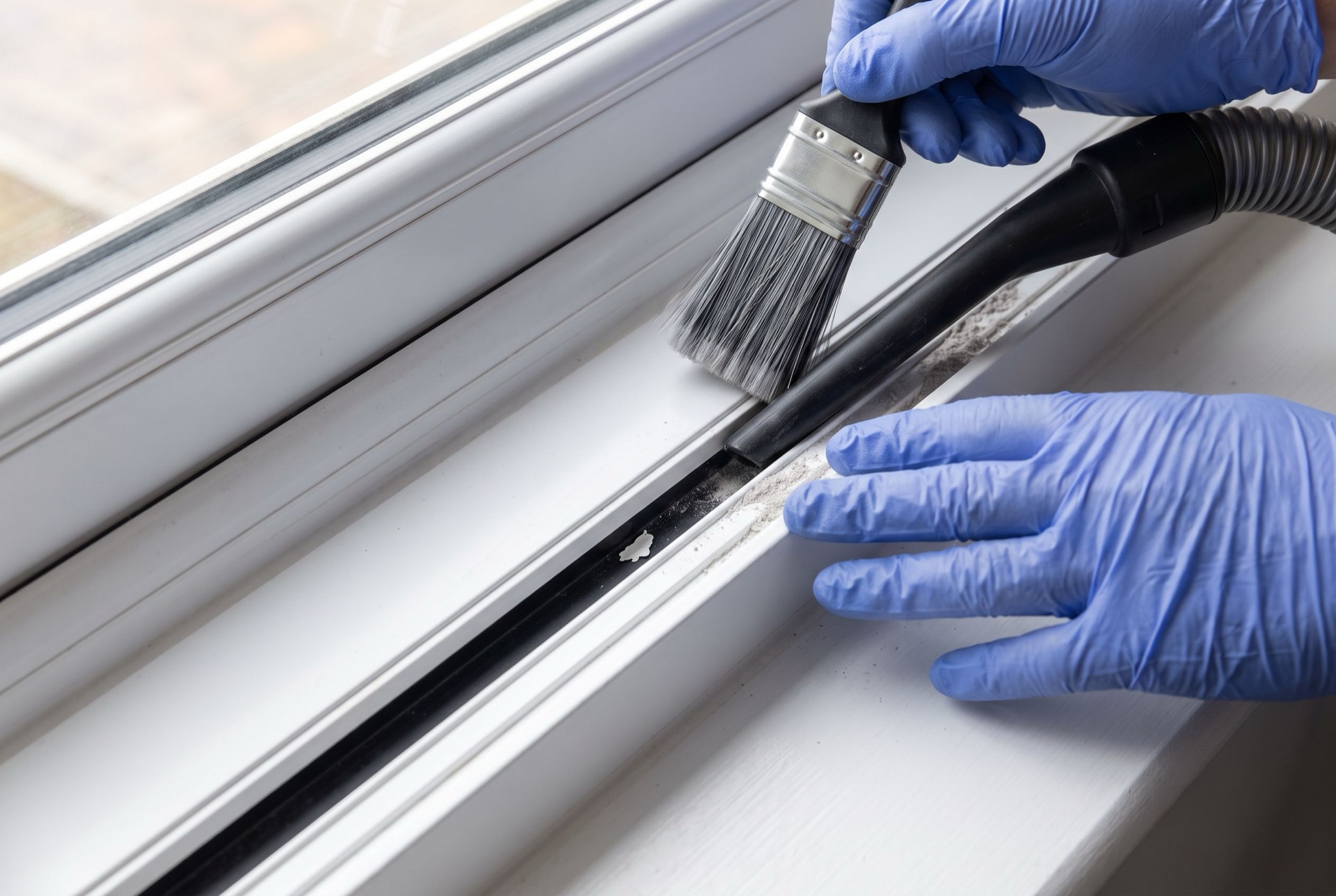
| Window tracks and trickle vents | Plaster dust and paint flecks in the drainage slots | Needs a brush and a crevice tool, not a cloth |
| Tops of doors, frames and wall units | A grey layer you only see from a step ladder | Out of eyeline, so an inspector rarely checks it |
| Extract and MVHR grilles | Dust drawn in while the system ran during works | Often fitted late and skipped |
| Radiators and towel rails | Dust between the fins and behind the panel | Hard to reach without the right brush |
| Sockets and switches | Paint specks and fingerprints | Easy to miss on white plates |
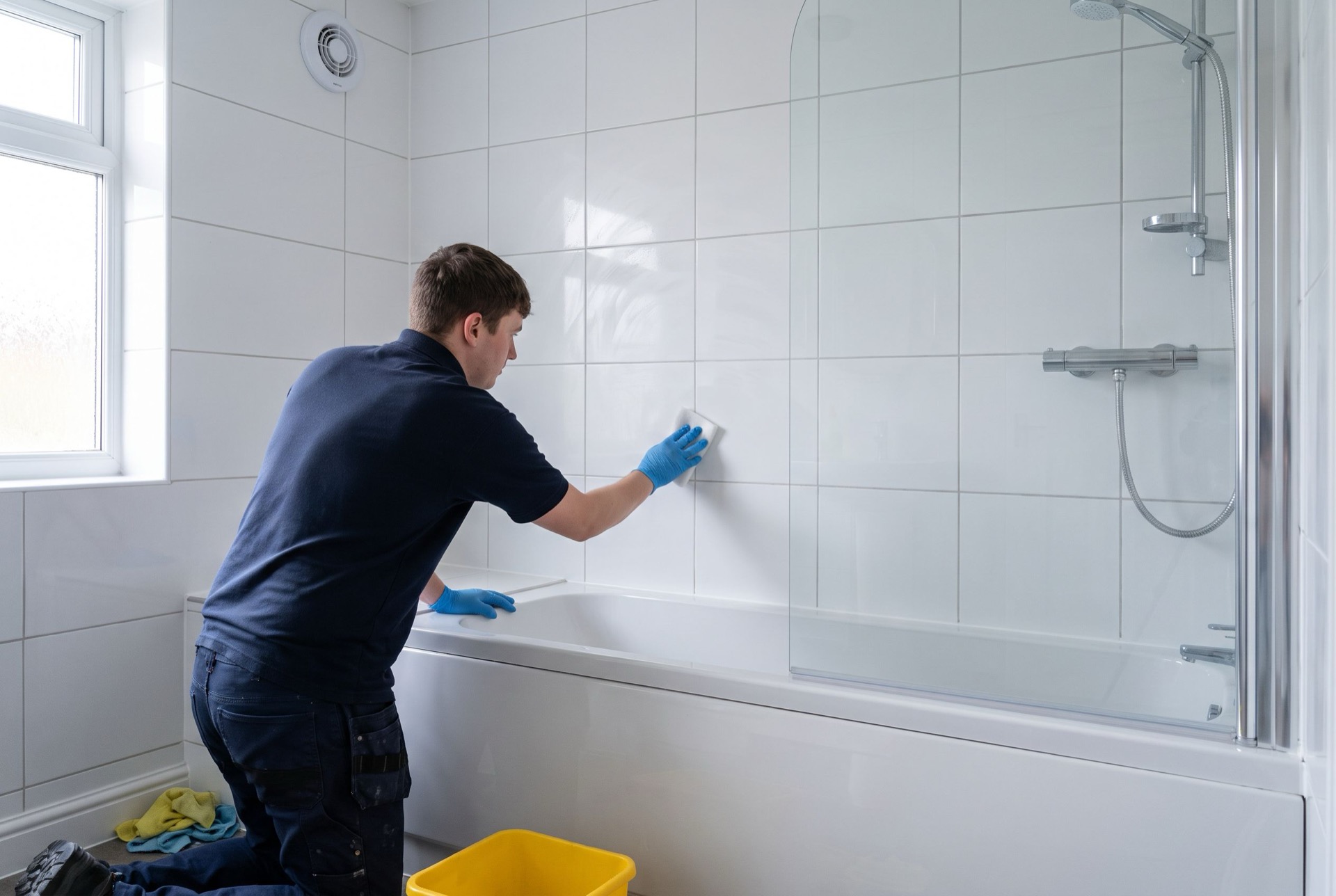
| Tiles and sealant | Grout haze and silicone smears | Looks fine head on, shows up in side light |
| Film and labels | Strips of protective film on frame edges and appliance doors | Peeled in a hurry, edges left behind |
| Kickboards and bath panels | Dust and plaster behind and along the bottom | Low down and often clipped on last |
| Balcony thresholds and external glass | Site dirt and splashes outside | Needs access, and sits outside the internal scope |
| Meter and utility cupboards | Offcuts, packaging and dust | Treated as a services space, not part of the home |
| Inside the oven | Film on the inner glass, dust in the cavity | Nobody opens it |
Why the Dust Keeps Coming Back in a New Build
New homes are built with a lot of water. NHBC's guidance for new owners says up to 8,000 litres can go into a home's materials during construction, and it dries out over time.
Once the heating goes on, the house dries and shrinks slightly. Fine dust lifts out of joints, voids, radiators and ventilation, then settles on every flat surface you cleaned last week.
It is normal and it does stop. Our guide on how to get rid of builders dust sets out the method and the timing of each pass, so we will not repeat it here.
Ventilation, trickle vents and filters
Trickle vents should be brushed and vacuumed, then wiped, with the vent left open. Extract grilles and MVHR valves can be vacuumed and wiped on the face.
Leave the settings alone. MVHR valves are set when the system is commissioned, and twisting them to clean behind changes the airflow.
Filter changes belong to the developer or the maintenance schedule in your home user guide, so ask when the first one is due.
Clean First, Then Inspect
If your developer is registered under the Code, you can visit, or send a qualified inspector, for a pre-completion inspection after the notice to complete and before completion. The Code's standard says internal walls are checked "in natural daylight from a minimum distance of two metres and not shining a light on the surface".
The NHQB pre-completion checklist goes into finer detail. It checks that "paint splashes are not visible on switches, sockets" and that wardrobe and drawer finishes are free from obvious scratches "when viewed from 0.5m".
Dust hides exactly those things. A scratch on a drawer front or a chip on a tile sill disappears under a film of plaster dust, and turns up a week after you have signed.
The order that works
Builders clean first, then the pre-completion inspection or snagging, then the fixes. After that, leave 24 to 48 hours for dust to settle, do the sparkle clean, and move in.
That is the same sequence we set out in the snagging section of our sparkle clean guide. The point for new builds is that a sparkle clean done before the snagging fixes gets undone by them.
After you move in
Under the Code, developers should aim to resolve most after-sales issues within 30 days. Snags reported within two years of completion fall under the developer's after-sales service.
So anything you find while you clean in the first weeks, such as a cracked tile, a scratched worktop or a chipped bath, report it in writing straight away.
What to Check Before You Move In
Use this on the inspection visit, the home demonstration if your developer offers one, or the day you get the keys. It is new build specific, so it will not repeat the room-by-room list in our after builders cleaning checklist.
| Check | How | What good looks like |
|---|---|---|
| Window tracks | Open each window and look down into the track | No plaster, grit or paint flecks in the drainage slots |
| Trickle vents | Slide them open and run a finger along the inside | No dust or debris, vent opens fully |
| Kitchen drawers | Pull each drawer right out | Runners and corners free of sawdust |
| Tops of doors | Run a finger along the top edge | Clean finger |
| Sockets and switches | Look at each plate in daylight | No paint specks, no fingerprints |
| Tiles | Look along the wall with the light from the side | No cloudy haze, grout lines clean |
| Sealant | Check round the bath, basin and worktop | Neat bead, no smears on the surrounding surface |
| Film and labels | Check frame edges, oven glass and appliance doors | All film off, no sticky residue |
| Extract grilles | Look up at each one | Face clean, no grey build-up |
| Floors at the edges | Look along the skirting line | No dust line, no paint or plaster on the floor |
Photograph anything that fails, room by room. It makes the conversation with the site team much shorter.
For Developers and Contractors
At Avonside House, Fletton Quays, we delivered sparkle cleans, window cleaning and communal areas across 100 apartments and more than 65,000 sq ft of floor space. The whole programme was handed over on schedule, and the full Avonside House case study sets out how we ran it.
The lesson that carries across to smaller schemes is to plan the clean into the build programme rather than book it at the end.
What to send for a quote
- Number of units, house types and floors, plus whether there is a working lift
- Site induction requirements and working hours
- Whether water and power are live in the units
- Where snagging has reached
- Floor and worktop finishes
- The handover date for each phase
Our teams are CSCS certified, DBS checked and fully insured, and we provide RAMS and method statements on request. Details are on our accreditations page.
Communal areas and external glazing
A spotless apartment off a dusty corridor will not stay spotless. Trades and buyers walk through the communal areas, so stairs, lobbies and corridors need cleaning at the same stage as the units.
External glazing needs the same thought. Balconies and upper-floor windows need access planned before the scaffold or MEWP leaves site.
Doing It Yourself vs Booking a New Build Clean
Be honest about the size of the job. A one or two-bed flat where the developer's sparkle clean was decent is usually manageable yourself with a good vacuum, microfibre cloths and the checks above.
It is a different story when there is dust in the vents and radiators, carpets were laid while the trades were still working, or you have a three-storey house with a lot of glass. That is when a professional clean earns its cost, and when HEPA extraction matters.
Our DIY vs professional comparison goes through the trade-offs in detail.
On price, a new build clean is priced like any other after builders clean. The number of rooms, the amount of glass, access and how much the developer's clean left behind all move the figure, and our after builders cleaning cost guide explains each factor.
If you want to know what a builders clean includes before you book one, read what is a builders clean.
FAQs
Do new build homes get cleaned before you move in?
Usually, yes. Most developers book a builders clean once the trades leave and a sparkle clean before completion. That clean is aimed at getting the home through inspection, so fine dust in cupboards, window tracks, vents and radiators is often still there, and more settles once the heating goes on.
Is the developer responsible for cleaning a new build?
The NHBC Standards expect work to be left in a clean state at handover, with protective coverings removed and fittings cleaned and dusted. They do not set out what clean means in detail, so the standard is largely the developer's call. Problems with the finish itself are snags, and those go back to the developer.
Should I clean my new build before the snagging inspection?
The home should be clean before anyone inspects it, because dust hides scratches, chips and paint marks. That clean is the developer's job, not yours. If the unit is still dusty on the day of your pre-completion inspection, note it on the checklist and ask for it to be cleaned before completion.
How long does dust keep appearing in a new build?
Expect fine dust to keep appearing for the first weeks you live there. A new home holds a lot of construction moisture, and as the heating dries it out, dust lifts from joints, voids, radiators and vents. A thorough clean after you move in, then a light pass once the heating has been on, usually settles it.
Is it worth paying for a professional new build clean?
For a small flat where the developer's sparkle clean was good, often not. You can handle the inside of cupboards and a final wipe yourself. For a larger house, a home with lots of glazing, or a unit where carpets went down during works and dust is in the vents, a professional clean takes a lot of work off your hands.
Getting the Keys Soon?
Send us your completion date, the number of bedrooms or units, and a few photos of the rooms. We will tell you whether it needs one visit or two, and quote for our new build cleaning services.
We are based in London and also take on larger developments outside it, as Avonside House in Peterborough shows. Request a free quote or call 0208 058 2037.
Last updated: 31 October 2026. This guide covers new homes in England built under the NHBC Standards and, where the developer is registered, the New Homes Quality Code. Check your own contract and warranty documents for the exact terms that apply to your home.


